
From Reality to Faith… And Back
by
Book Cover & Preview Text
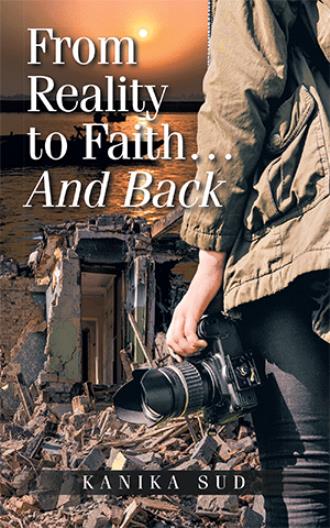
A horror show of buildings swaying, people screaming with fear — the tremors had taken everybody off guard. A mountainside in Maithili, a densely populated suburb in Kripasheher, had collapsed into the broad river. The areas of Kripasheher that were closer to the river were the worst hit because of the lack of coastal preparedness. There were no clear evacuation routes, and dense housing had made things worse. Remote areas were not even prewarned. Only a week before, on that same hill, a proud house had stood — one you could have placed inside a fairy-tale painting. And now, the same house was mere rubble. Corporate offices that touched the skies were nowhere to be seen. The dawn after the quake was mottled with concrete dust above and collapsed construction below.
And Aastha stood in the middle of all of this, without any fault of her own. The shock, fear and confusion of it all were heavy for a six-year-old. She cried intermittently but did not know who could comfort her. She saw falling debris, and shut her eyes to avoid the sight of a man who breathed his last in front of her. She stood there for hours, clinging to what seemed a pillar and that entire period of entrapment left her blank. Mud streaked her face and her limbs were unharmed – a small miracle. She heard the distant bark of dogs but had no idea of how hard the rescue teams were searching for a sign of life; how sensitive audio equipment and thermal imaging had become fruitless aids and how rescue workers continued to search despite the danger to their own lives. These were details left for unfortunate adults and disaster management cells. For a child, nothing made any sense whatsoever. Finally, when time unfroze itself, she rubbed her eyes carefully, and stopped crying. She rose up to get a clear view of a man whose silhouette approached her at a steady pace. Aastha was about to meet her rescuer.
She wiped her mud-stained face and saw a man in a round cap. Her mother had often warned her of strangers with those caps. It was the kind her mother warned against — plain round caps often worn by strangers at markets. Aastha remembered her mother saying, "They'll look kind, some of them. But don't believe them — these are troubled times." She cried helplessly as she thought of her parents. All she wanted was her mother’s lap. Nothing else. That was one safe place. Aastha's family, much like every other family, was lost in the rubble.
"Beta, do you know where your mother lives?" the stranger asked kindly. Aastha, confused and breathless, whispered, “I was thinking about her, Chacha. She… we— we lived down Maple Street. Over there”. The man’s name was Rahim. His eyes softened as the child addressed him fondly. Chacha Rahim worked with the disaster management unit in Uttaragram, a small village north of Kripasheher. He knew that Maple Street had the highest death toll in the city and almost no one had survived. The rescue team in Maple Street was now exposed to gas leaks, and the workers were now experiencing aftershocks. People did what they could, but as incident commander, Rahim knew that little could be done there. Years of working for relief societies had given him patience and an endless capacity to empathize with pain. He had seen the child as he left the rubble of the post office across from where Aastha now stood. He whispered “Alhamdulillah” and touched his chest briefly. She stood amid the collapsed streets. She had, however, been left unscarred. He knelt to meet her eye level and, slowly building trust, extended his hand towards her. He gently helped her out of the debris. He helped her wash her face, and she could now see him wearing a uniform and a badge. She stood quietly, suddenly aware of the number of people in such uniforms all around her. Another man waved his hand behind him gently. Aastha decided to hold his hand and walk with him, not knowing what else to do.
Formats

Book Details
About the Book
A young girl, who miraculously survives an earthquake, loses her family. Raised by an agnostic Muslim, she chooses rationality over doctrine, and sets out to discover herself. Her journey through the alleys and crossroads of India becomes a mirror of societys randomness and the polarities of faith and reality.
Will Aastha find her parents? Or will life hand her more questions than answers?
About the Author
Kanika loves to explore the mind,the world and the true Self. She believes that observation is fundamental to human existence, and that the blend of observation, thought, philosophy and language takes mankind forward in the right direction.